When the Bell Rings/Classroom Experiences: Andy

I remember Andy as a spirited, warmhearted sixteen-year-old. He wasn’t the sharpest mind in class, but he never had trouble understanding anything, either. He was fine with hovering around the middle of the academic scale, instead, letting his human qualities carry him through life. He was witty and slightly more mature than his classmates. I liked this about him. Most teachers did. He never caused problems; he did his work; he was respectful. Us teachers don’t ask for too much more.


One other interesting fact about Andy was that he never missed school, and while he was in school, he was usually in a good mood, never adverse to being social or to having a conversation about literature or life, whichever subject meant more to him at the time. He shared the class with thirty-eight other students, but Andy’s placidity and aura set him apart from the pack. 


He was a big, chunky kid, too, clumsy even, his equally big persona doing its best to squeeze into his still evolving frame. This is was another part of his charm. He didn’t see himself as big. He was unaware that he was growing. He jiggled into the room with heavy steps and long strides, always hurrying to his desk for no reason other than to sit. He was child-like, and he seldom looked too deeply into the world around him.


Then, one day, Andy disappeared. He stopped coming to school and no one had heard from him. His absence on the first day was obvious. “Where’s Andy?” I asked to no one in particular.  They all knew him. He was semi-popular. Students were still filing in when I asked. “He didn’t come today,” said Sal, one of Andy’s buddies. “Why?” I asked. “I dunna know,” said Sal. They day went on without Andy, his empty desk taking up space in the middle of the room like a prop in theater class. Andy was absent the next day…and the next…and the next. Two weeks had gone by before he emerged.


At first glance, on his return, it was obvious to me that Andy was reeling from something, perhaps a tragedy or mind-altering event. He had changed, and it wasn’t all good. He wasn’t the first one to his desk as he so often was, and he wasn’t buzzing with the same energy that propelled him from point A to point B.  His face, too, had changed, altered by expressions seen on people who are not in a good place. “What happened,” I thought to myself. 


I was happy to have him back in class, though, and I didn’t waste time in making the first joke. “What’s up, Andy? Where you been man?” I asked. “I was sick,” he said. He was looking down when he answered, a little ashamed it seemed. . There wasn’t even a chuckle with his response. Just stoicism. I laughed, anyway, and said, “Yeah, I bet. Sick in the head, huh?” Andy managed a, “Yeah, something like that.” I stared at him for a bit–he didn’t see me looking–and a tinge sympathy washed over me.


He was wounded. There was no doubt. It was in his voice. It was in his body language. This is how I knew something was amiss. I couldn’t even get a smile from him. Gone was the personality I had grown to like, and even admired. His usual joviality and childlike innocence were absent, too.


His disposition occupied my mind for the remainder of the period. When the dismissal bell rang, I called out to him as he was walked out of the room. “Andy!” He slowed near the door. “What’s up?” I asked. “Ah, nothing,” he said as he turned back towards me. He wanted to talk. “I was sick. I was in the hospital.” “Oh, yeah. You alright? What happened?” I asked. “Well, not really. They say I have Leukemia. They did a bunch of tests. The doctor told me I have three-weeks to live.” “What? You gotta be kidding me!” I said. I was dumfounded by Andy’s revelation.  “What do you mean you have three-weeks to live? What happened?” I asked. He said some things, I’m sure, but I don’t recall any thing after his confession, except at the end.


I was stunned. What do you say when you hear a person you care about say something like this? What do you say to a kid who tells you he has three-weeks to live? I wasn’t trained for this. This part wasn’t in the teacher’s manual. No, this was another lesson. It was called “being human,” and it was tough.


Finally, at the end, all I could muster was, “Damn, Andy. That’s gotta be tough. Could they be wrong? Is there anything they can do–like do they have a cure?” I was genuinely naive on the matter. I didn’t know then that Leukemia was a form of cancer. I had seen the commercials with the kids missing hair and all that, and I sometimes saw people in stores asking for money for Leukemia awareness, but I never put much thought into it. “I don’t know,” said Andy. “I have to go back to the doctor.” It was clear from his tone that Andy was in a bad place. “We’ll if you need anything at all, just let me know, Andy. You know? Try to hang in there. You’ll be alright. Don’t worry about it.” I said. “Alright, Mr. C. Thanks. Later,” Andy said and we left it at that. 


This had taken place on a Friday. I remember this because my girlfriend and I had reservations for Carmine’s in South Pasadena. All week I had been looking forward to the seafood pasta, but the news of Andy’s disease hit me on an emotional level.  


The ride from Norwalk to Pasadena didn’t make things easier. Fridays are brutal, especially during rush hour. I jumped on the 605 and braced for a long, sweaty, hour-plus drive. It was the month of May, and the summer heat, as usual, came early. 


The 605 was a parking lot. I had the windows down and the radio on. I couldn’t tell you what was playing. It was peripheral, all conscious thought taking a backseat to Andy. As I sat in traffic, I figured I had time to give Andy a call and see how he was doing. It had been about three-hours since I last saw him, but I wanted to check-in and talk a bit, mostly just to make myself feel better. I reached into the backseat for my briefcase. I had my roll sheets in it, and these sheets contained my students’ contact info. I brought the case to the front seat and rummaged through ungraded essays and tests, looking for my roll book. I opened it to Sixth Period and found Andy’s home number. I called.


The A.C. didn’t work, but I had to roll up the windows in order hear clearly. Andy’s mom answered. “Hi, Mrs. Torres,” I said.  “This is Mr. Cisneros, Andy’s English teacher at Norwalk.” “Oh, Hi, Mr. Cisneros. How are you?” she asked. She was a nice lady with a sweet motherly voice. I had met her once before. She seemed pleased with the call, probably knowing that it couldn’t be anything too bad. Andy was a good kid. I answered, “I’m good. How are you doing?” “We’re all good. Thank you, Mr. Cisneros” she said. “Oh, good. Well, I’m just calling to see how Andy is doing. He was absent for a while. He said he was sick.” “Oh, yeah, he was sick, but he’s ok right now. He’s better,” she said. There wasn’t anything odd in her voice. She seemed in good spirits, pleased with Andy’s progress.


“Oh, that’s good,” I said. “Well, I was just calling because I was worried about Andy. I mean it must be tough receiving that type of news.” I began feeling awkward for some reason, and I kind of regretted making the call. “What news are you talking about?” Andy’s mom asked. “Well, you know how the doctor told Andy that he has Leukemia and how he has three-weeks to live.” I was now stammering, the sweat intensifying. “Andy? Andy Torres? My son?” I had set off the alarm. “Yeah, Mrs. Torres! Andy Torres from Norwalk. He’s in my eleventh grade English class. He came to school today. He told me that he has Leukemia and that he has three-weeks to live. He said the doctor told him.” 


“Huh? No, no, no! Andy doesn’t have Leukemia,” she said with an uncomfortable laugh. “The doctor didn’t tell him this. We went to the doctor, but he doesn’t have Leukemia. He’s not sick,” she said. “What?” I thought to myself. Then I said, “Well, Andy told me this today. He told me after class. I asked where he had been, and he told me that he was sick. I don’t know what’s going on, but this is what he told me.” “No, he’s not sick, and I’m going to have a talk with him.” I could tell Mrs. Torres was angry. It was in her hurried voice. The “Mexican” mom in her had been awakened, and experience has taught me that when a Mexican mom gets angry, it’s going down!


“Mrs. Torres, I think you should first talk to Andy. You know be careful. I think maybe Andy is asking for attention or something. Try not to be too mad at him. There’s probably a reason why he said all this. I don’t think you should hit him or punish him right now. I think talking to him is the best thing right now,” I said. I was scrambling to do my best to protect Andy from getting the belt or chancla. His dad was an old-school Mexican dude with a big-ass belt buckle and a cowboy hat and a big-ass mustache and pointy boots. An ass beating was in Andy’s very near future. I knew it.


“Ok, Mr. Cisneros. I’m going to talk to Andy. I’ll wait until my husband comes home,” Mrs. Torres said. “Ok, well, I’m sorry about this. I think Andy just needs a talk. He should be ok,” I said. “Ok, Mr. Cisneros. Thank you for checking on him. Gracias por la llamada,” she said. “Ok, bye, Mrs. Torres.” “Bye,” she said, and that was it.


I wish I could tell you what happened after all of this, but I can’t. I don’t know. I made a follow up call, but I didn’t get an answer. I made the call because Andy never returned to school. There were only a few weeks left in the school-year, but Andy never came back.


I guess I could speculate, as I have, as to why Andy would make up a story about having Leukemia and having three-weeks to live. The classic, armchair psychologist explanation says that this was Andy’s way of asking for attention. This could be true, but Andy came from a pretty good home. He had parents who were present, not that these things alone prevent such things from happening, but on the surface, he wasn’t starved from attention. I saw a change in Andy.


I’m sure there are reasons why Andy did what he did. I’m just a teacher, though. I do what I can with what I have. Diagnosing my students’ issues is challenging. They all have issues, each one of them, and I would go crazy if I tried to cater to all their emotional and psychological needs. It wouldn’t be a healthy endeavor. So I do what I can. I am human with them. I praise them. I discipline them. I love them…at least the ones that are open to love. There are some students that have never experienced the spirit of love, just as there are students that have never seen the ocean. Dealing with kids’ emotions takes up the most time in the teaching profession. 


Getting to the Next Level: A Student-Athlete Counselor

Let me preface this piece by saying that as a coach and teacher, there is much more I could do to help my student-athletes. I am aware of this, and I have carried this burden for as long as I have been a coach. It’s not easy, however. Because of the many responsibilities that come with being an educator and coach, coupled with the responsibilities I am as a husband, father, brother, and friend, it’s difficult finding the extra time necessary to help my players prepare for a possible playing career at the collegiate and/or university level. To improve his players’ chances, a coach must take on the role of “counselor” and have access to counseling resources.  After all, helping students get to post-secondary education is an intrinsic part of a counselor’s job description, at least philosophically speaking. However, even for actual counselors, this isn’t an easy task. Counselors are overburdened with massive student loads, sometimes 450 kids per counselor. Add to this the plethora of responsibilities that counselors have to account for, including class scheduling, transcript explanations, parent conferences, A-G requirements, meetings, and graduation. It’s a seemingly unending line of duties, and if you’re familiar with the world of public education, then you can sympathize.  

In this piece, I introduce an idea that could help high school athletes earn athletic scholarships. 

IDEA

As the head coach of a nationally ranked soccer team (Alisal High School) I’ve had the privilege of coaching some incredibly talented soccer players, and while a few have been able to continue their playing careers at the college and university levels, there have been many, many more that should’ve followed in these players’ footsteps. It should be noted that there is also a significant number of gifted soccer players that never actually get to play for their high schools because they have difficulty meeting their school’s eligibility requirements, which usually consist of a 2.0 GPA (C- average) and Satisfactory Citizenship marks. This is a topic for another time, though.

Getting an student-athlete to the next level is a challenge. In addition to having the proper GPA, there’s a list of qualifications that a student-athlete must meet, including specific class loads for specific Divisions (DI, DII, DIII, etc.), deadlines, GPA’s, SAT’s and ACT’s, and financial aid applications. What makes this even more difficult is that the road built to connect the high school athlete to an NCAA career is unfamiliar to many in secondary education, even to actual high school counselors. Counselors are the people that can facilitate the process for student-athletes, but as it stands, many counselors are not versed in NCCA Clearinghouse Qualifications or the “Core 16.” They couldn’t tell you what it means to be a “Qualifier” or “Partial Qualifier.” They don’t normally have to deal with this language, and so they simply do not know, and there’s no urgency to follow up and learn it. Of course, there are counselors that have some knowledge of this world, but they’re scarce.

What can I do to put my players in prime position to earn a full-ride, soccer scholarship right out of high school? I think about this a lot, mainly because I am surrounded by a vast amount of talent, talent that often goes wasted and unnoticed. It is a question that weighs on me heavily, but I believe I may have found an answer, or at least an idea that can lead to one.

First, however, let me tell you about Larry Beltran. A divine talent, Larry was a champion at every level of soccer he’s ever played. In high school, he was a two-time league champion, a California DI State-Section Champion, MVP, All-League Player-of-the-year, All-County Player-of-the-Year, First Team All-America Selection, and an All-Star. He was every recruiter’s dream, with Division II schools not even being an option. In fact, there’s even a possibility that Larry, at the age of 17, could’ve forged a professional career for himself had he been given the chance.

After his senior year, I received a call from the assistant coach at UCLA. They wanted Larry. The coach was reviewing the names on the First Team All-America list and noticed something odd about Larry’s name. Each First Team selection was coupled with the name of the university of which they had committed to play soccer. Larry’s name was not paired with any university. This part of the list was blank. He was the only one on that list that was not connected to a university. Naturally, UCLA was salivating at the idea of snagging an All-America player, one that had somehow escaped everyone’s view.

“Hi, coach. Just want to let you know that we’re really interested bringing Larry to UCLA. We noticed that he’s not committed to any school. What’s his GPA?” It was the first and only question he asked. “Well, I think he has a 2.2,” I said. “Oh, ok. Damn. I’m sorry. We can’t get him in, but tell him to go to the community college and play two-years, and maybe we can be ready for him when he transfers,” he said. “Ok, coach. I’ll let him know. Thanks,” I said. It was not a pleasant call. I really wanted this for Larry. Larry deserved it. His talent needed to be showcased. Unfortunately, when it came to academic effort and guidance, Larry’s four-year plan left a lot to be desired.

Larry’s is just one story of many similar stories. He didn’t have the grades. There was nothing the UCLA coach could’ve done for Larry because the first stipulation is that an prospective athlete must first be able to meet the school’s basic admission requirements. These requirements are set forth by the university and not the coach. The coach must abide by these requirements. Once the athlete gets accepted, then the coaches can step in an begin to construct a plan for their athlete.

Could something had been done to improve Larry’s chances of getting to UCLA, while he was still a high school student? The answer is a resounding “Yes!” And this is where I present my proposal. It’s a multi-step process, but it’s not outside the realm of the infrastructure that is already in place at every high school in the nation.

To keep things simple, I’ll use my school as an example for the plan. I propose that every coach at Alisal High School, in all sports, pinpoints those athletes who he or she believes displays the athletic talent worthy of perhaps earning a full-ride or even partial-ride athletic scholarship to university in their respective sport. Even if the potential is small, these athletes should be identified by coaches.

Now, once these athletes have been identified, the load could range from 100 to 200 athletes, they would then be grouped together, and they would be assigned to a “Student-Athlete Counselor,” a specific counselor that is 100%, well-versed in the NCAA Clearinghouse language and is fully committed to ensuring that these identified athletes stay on course and in-line with NCAA Qualifier requirements. It would require vigilance on the part of the coach and counselor, with periodic athletic checks to make sure that the identified athlete is on course through all four-years of high school. Ideally, we would catch these athletes as freshman, but I believe it would be more realistic to identify them as sophomores, once coaches have already seen these athletes perform. The input of middle school coaches could definitely help in identifying freshman talent, giving us early detection help.

If Larry, a player whose talents were known by many when he was barely a freshman, would’ve had this kind of academic guidance, things would perhaps be different for him. He’d probably be finishing his career at UCLA, perhaps readying for a professional career. As it turned out, Larry went on to even more soccer success, helping the local community college earn its first ever California State Championship. This, of course, is not surprising given Larry’s level of talent. Now, Larry is doing his best to move on, but he’s caught in somewhat of a rut, three-years later, still at the community colleges, his two-years of eligibility used up, trying to transfer to a university. The talent is still there, but UCLA is no longer an option.

My hope is that Alisal High School will move to create this position and to give our student-athletes a fighter’s chance of getting to the next level where they should be.

When the Bell Rings: My Classroom Experiences

Manny

For high school teachers, the Student Behavior Referral Form is perhaps the most popular and mostly used document in the world of education. This is because the “referral” provides the most powerful form of leverage teachers have in dealing with unruly and defiant students.  When used judiciously and appropriately, it allows teachers to formally dismiss a student from their class for a certain length of time, depending on the severity of the kid’s behavior. A dismissal can range from just the remainder of the period to a one-week suspension. In the most extreme cases, a referral could potentially lead to student expulsion.

Ask any teacher and they’ll tell you that getting rid of that “one kid” is a game changer in terms of maintaining classroom management and creating a safe and effective learning environment for all students. If you have trouble picturing this, just imagine a kid wielding a knife in a crowded classroom and every student in this class cowering and nervous and completely aware of the knife and the kid. Imagine the tension level. Now, imagine the kid with the knife being removed from the class for good, no longer to ever return. Imagine the peace. There you go. This is what it’s like to get rid of that “one kid.”

Of course, because of its quick-fix quality, some teachers are keen on overusing the referral, often gratuitously. The power-struggle between a teacher and unruly kid can go on for some time, and when it does, resentment is born, causing the teacher to continually dismiss a kid just because he doesn’t like him. It happens. This behavior is no different than when a second grader gives candy to all her classmates, except to that “one kid,” because she doesn’t like him. Addressing the same problem child for 180 days would shrink anyone’s heart.

In my thirteen-year career as an English teacher (I am no longer a mainstream teacher), I had hundreds of reasons to write several referrals. I didn’t, though. This is because my patience level, for some reason, is almost Buddha-like. I don’t know from where it came, but I am blessed with a respectable level of tolerance and patience. In thirteen-years of dealing with vampires, kids that can suck the soul right out of a person, I pride myself on only writing two referrals in my thirteen-years as a mainstream teacher. Oh, believe me, I had those fucking forms filled-out and signed and ready to be delivered, but there was always a reason, a voice gently imploring me to refrain from doing so.

However, I gave in twice. One of the referrals, at least I believe, had legitimate cause. It was the last day of school, and during these last few weeks of classes, I had received two, telephoned death threats. When Alex said to me on the last day of school as he walked out of class, “Watch your back, Mr. C. You might get shot,” all while pointing a fake finger gun at me, I naturally balked and fell into self-defense mode. I reported it to our administrative team. The kid and his parents were brought in for a formal meeting, which ultimately resulted in Michael’s expulsion from the district. I saw him a few years later when I went to Little Cesar’s to get pizza for my class. He was the cashier. We remembered each other, and no hard feelings were had. I should’ve asked if he graduated. I hope he did.

Maybe Michael’s referral was warranted. His was the second I had ever written. Manny’s was the first. Manny was a pain in the ass of the highest order. He came to class prepared to test me every single day, and I absorbed his behavior and his remarks and his defiance. I was not going to let him beat me. He was a wannabe gangbanger, and he was always decked out in the standard Cholo uniform: oversized white T-shirt, oversized gray jeans, Nike Cortez, shaved head, and little starter mustache. His school supplies were rolled into a small tube and shoved into the back pocket of his 501’s, with a black pen clipped to the lip of the front pocket. It was all he ever brought to school, and in his eyes, it was all he ever needed.

When Manny said something like, “Fuck this shit! I ain’t moving. This is my seat!” I would ignore him. I’d wait a minute or so, then shoot him a look, just to let him know I hadn’t forgot about him. We’d lock eyes, and then he’d move back to his seat. When he was twenty-minutes late to our fifth period class, the class after lunch, I’d ask, “You got a pass?” “I was in the bathroom,” he’d say. Then he would sit at his seat, and look around to see what everyone was doing. He’d then pull out his paper and start drawing, and I wouldn’t stop him. When he’d say, “I don’t get it,” after I had just explained subject-verb agreement, and I’d look to him, sort of relieved that he was asking for help, only to notice that he was drawing a picture of Mickey Mouse smoking a joint, I’d look away and ignore him. He knew what he was doing, but I did, too.
Manny was reacting to something, but I could not figure it out. He was angry, but I could not tell why?

I must’ve tried every geometrical, data driven seating assignment possible for Manny, but wherever I sat him, he always found a way to fuck things up, whether it was tagging on a desk, talking across the room, banging his head against the closet, or just straight up mad-dogging me. It was always something with Manny.
At the semester, I had Manny moved into my sixth period class. I figured that he might benefit from a change of scenery, different faces and personalities. Nothing changed, though, but because it was sixth period, I was able to keep him for after-school detention, something I began to do more often than not.

I was also the school’s yearbook adviser, so I usually had students in my class working on their assignments long after the day was done. During after school detention, Manny sat right in front of the class, as everybody around him worked on their yearbook assignments.

As a teacher back then, I never really used a desk. I liked it this way. Instead, I sat in a chair with wheels and used the student desk in the first row as my home, even when there was a kid sitting there. They never seemed to mind. In sixth period, this desk belonged to Manny, but it was also mine. We shared what little space there was on that little desk, but we also shared the immediate space around us. There was nowhere for him to look other than at my face, and he couldn’t get up and wander because I was always there to remind him that it was a bad idea. I wasn’t mean about it. I didn’t have to be. He didn’t like being there, and he probably figured that if he cooperated, then maybe I’d let him move to another desk. Nevertheless, I kept him after class for nor more than fifteen-minutes, almost on a daily basis. I tried to talk with him, but it was almost futile.

At some point, Manny’s case became personal. I let it get to me, but I couldn’t help it. He began to occupy my mental downtime, time I reserve for not thinking about anything that has to do with teaching. I found myself thinking about him on my drives to and from work. I talked to my girlfriend Jennifer about him. I brought him up with friends. Manny was a rash, and he wasn’t going away.

I take full responsibility for allowing this to happen. I could’ve walked away. A referral cycle would’ve gotten him out of everyone’s hair, and with two-weeks left in the school year, the quality of my own life would’ve greatly improved. Nevertheless, I kept on. I needed to know what was at the center of his conflict. What was it that was causing his rebellion? There was something at work here, and I was determined to find the source. I just didn’t know any better.

One day, with a week left in school, I was sitting directly in front of him, sharing a desk with him. Keep in mind that there were thirty-seven other desks in the room, but we were both sharing one. He was sitting in the built-in chair, and I was on my roller. There was peripheral action going on, as kids were working on their yearbook assignments, while other kids were coming in and out for cameras and pens and questions. But I sat there with Manny, doing my best to strike up even a semblance of dialogue.

I was working on my roll sheets, and Manny had his head down. After a while, I turned around, jumped off my chair, and erased the whiteboard. It had just gotten installed, and I liked that it was easy to clean (teachers are easy). When I was done, I jumped back into the chair and rolled right up to Manny’s desk, our desk. “So how’s your brother?” I asked. I had no knowledge of Manny’s having a brother. I was just asking, and I don’t know why I asked this particular question. He had his head down, but when I asked, he lifted it so that I could see his face. He looked tired, and his eyes were bloodshot and saggy, as if being a full-time asshole was tiring him. He looked like he was barely hanging on. “How do you know I have a brother?” he asked. I was surprised he answered, to be honest. “I don’t. I was just asking. Do you have a brother?” I asked. Manny kept his head up. He was rubbing his eyes. He was never this engaged. I had gotten his attention. “Yeah,” he said reluctantly. “He’s older or younger?” “He’s a senior,” Manny said. Manny was a junior. “Oh, cool! So you have an older brother then? He comes here?” I asked.” “Nah, he goes to Glen,” Manny said.” “What?” I said. “He goes to Glen and you come here? What’s up with that?” “Nah, it’s cuz they have like the things he needs and the classes he needs over there,” Manny said. “Oh,” I said. “Alright. Cool.”

Wow! I casted one final, desperate line, barely baited, and Manny took it. With one-week left in the school year, he fucking took it! I was reeling him, gently and slowly, and he was giving in. I think in this particular moment we were both happy. Both of us had let our guards down a little. We were trucing, and it felt good. We were both aware of it, too. Judging from his answers, Manny felt relieved.

“Oh, he’s a smart kid then, like GATE (gifted kids), and he’s in A.P. and all that shit, huh?” I asked. This is what I genuinely thought. I figured maybe Manny was pissed because he was the “dumb” one and his brother was the “smart” one, and that his parents favored his brother over Manny and he was pissed off about it…simple as that. “Nah, he’s a mute,” Manny said, “and they have special classes for him over there.”

Oh, shit! Things were coming together. Manny was beginning to have reasonable doubt. “Oh, damn. He’s mute? That’s crazy! So you know sign language then, huh?” I asked. Manny looked down a little. “Nah, I don’t know sign language. He’s a deaf, too. He can’t talk,” Manny said.

I was taken aback by Manny’s revelations, and then I knew immediately why Manny was so angry at life. The one guy that he’s supposed to be able to talk to about sex and girls and cars and movies and sports is a deaf mute! His older brother, his hero, is a deaf mute, and Manny can’t even communicate with him because he never bothered to learn sign language. In this moment, I felt for the guy. I really did. “Damn, dude, I’m sorry. “How come you don’t sign language?” I asked. “I don’t know,” Manny said. “I never learned.” I answered with, “Well, it’s not too late.” “Nah, he said.”

The last four-days of school were the most relaxed days I had had in a while. Manny and I, all of sudden, had a student/teacher relationship. We were like friends. We even talked about stuff during class. We couldn’t talk after school because he no longer earned detention. In the end, I saw Manny express a genuine, unforgiving smile.

Manny taught me a huge lesson. He taught me to never give up on a kid. He taught me that all kids, even the kind and gentle ones, are fighting internal and external forces, some more difficult than others, and that as a teacher, I had to be patient with these kids and try to find the source of their sorrow, if possible, so that we can all move forward. My experience with Manny ranks up there as one of the three greatest experiences of my teaching career. As is usually the case, though, I don’t have an update on Manny’s future. He’s probably thirty-eight-years old by now. I just hope he learned sign language and is talking and listening to his brother, and that his brother is able to do the same with him.


The Bell Never Stops Ringing: My Classroom Chronicles

Virginia

In 1998, when I was first hired as an English teacher/Yearbook Adviser at a Los Angeles area high school, I entered the profession with not even ten-seconds of teaching experience. I was hired during a desperate time in California education, not that things have changed, but in 1998, I was catapulted into the classroom on an “Emergency Credential,” a temporary teaching license distributed to anyone with a heartbeat who expressed interest in teaching. As for me, there was absolutely nothing about my past, present, or future that expressed a genuine interest in becoming a teacher. I got into the profession simply because I needed the money. That’s it.

My first-year schedule consisted of four periods of eleventh grade English and one period dedicated to the construction of the school’s yearbook. The very first period of the day was reserved as my “prep” period. Prep periods provide teachers solitary time to prepare their assignments for the day. I didn’t know it then, but having a prep period at the beginning of the day, at 8 a.m., isn’t too ideal, at least it wasn’t for me. Yeah, it meant my teaching day didn’t start until close to 9 a.m., but it also meant that I would go though the entire day without a break, except for lunch. This proved exhausting, as I quickly found out.

The kids were masters of sapping the life out of me. Answering the same, incessant question is one of the worst parts of teaching. “What’s the date?” “What page?” What’s the date?” “What page?” “Mr. C., can I go the bathroom?” “Can I go, too?” It wore me down and drained a good portion of the energy I reserved for myself, so that when I got home, I was nearly comatose. I think a prep period during the middle part of the day is bit more accommodating and relaxing because a teacher can replenish just enough energy to plow through the rest of the day. A sixth period prep would be would be nice, too, I guess. Anyway, that was my schedule, and it remained so for the four-years I was at Norwalk High.

My first year went well. The kids and I shared connections. I liked them. They liked me. Being the yearbook adviser, too, was nice because it provided me a needed transition from teaching English and writing to a more creative form of teaching and learning.

I was assigned an yearbook staff, and I delegated assignments and sorted through pictures and layouts. It was hands-on work, and I derived great deal joy from it. It also provided another form of relief, one definitely more comical.

There were these two kids, Eli and Carlos. They didn’t really have the yearbook’s interests at heart, but they needed a class to complete their schedule, so their counselors gave them Yearbook. When it came time to giving assignments, they immediately volunteered to cover girls’ volleyball, and when kids volunteered for assignments, I seldom said”no.” I gave them both newly purchased digital cameras and a game schedule and sent them on their way.

A few weeks later, when I reviewed the pictures they had taken, I almost slammed the camera on the floor. The majority of the pictures were zoomed in shots of girls’ asses and of girls bending over. Even the opposing girls got screen time. Some girl was alway picking up a ball or tying her shoe. Pictures of the girls huddling together as a team was a reoccurring shot, too. I said, “C’mon, guys! This isn’t Playboy Magazine! You guys are killing me. I can’t use these. I’ll get fired. You need to get some different shots. You need action shots of them actually playing volleyball.” They were snickering because they knew what they were doing. All in all, it was a fun time, though. I got to know a lot of students. My goal for the yearbook staff was simple: try to get a picture of every single student on this campus into the yearbook, one way or another. We got pretty close, too.

The year buzzed by, and as June rolled in, my introduction to the final weeks of a school year was mind blowing. The students that choked in classes during most of the year were now asking their teachers for extra-credit or time to make up missing work. Then there were the students that were always asking to go to other classes to make up work for other teachers or they were asking you to not mark them absent while they took tests in other rooms. A lot of kids were in dire academic positions, and so there was a lot of scrambling and begging.  There was an issue at every turn, but like a kind-hearted teacher, I tried my best to help my own students improve their academic situations.

Rather than help only a few students, however, I decided to try to help all of my students. For the final piece of work of the year, I created an extra-credit assignment for them, a little something to help them earn the grade their parents would be proud of. It was a simple assignment. It had to be. There was no way I was going to read 175 essays with four-days left of school. No way!

On my blackboard, written in white chalk, was the saying, “The life you save may be your own.” The students saw it as they filed in for each period. I had them write it down, and then I said to them, “Your assignment is to write one paragraph about what you think this saying means. Just one paragraph! I don’t want an essay! I don’t want two paragraphs! Just one! It’s due tomorrow. You guys understand? Do you guys understand?” I had to ask twice to make sure it registered. The fair number of “yeahs,” and head nods signaled to me that they got it, and so they stuffed the assignment into their pockets or backpacks and left my room.

The next day, I collected about five paragraphs from second period, fifteen from third period, eight from fifth period (yearbook is fourth period), and twenty from sixth period. Virginia was in my sixth period. She came up to my desk, grabbed the stapler, and crunched together a set of hand-written pages in blue ink. It wasn’t a paragraph. It wasn’t even two paragraphs. Virginia submitted six, full pages of writing, front and back! Her penmanship was alarming, frantic and nervous, even scary. The run-on sentences and jumbled words seemed to be buzzing on the pages, strings of words sliding left and right, edging towards the edges of the pages, ready to jump to their deaths. My only thought was, “Fuck! I have to read all this shit! But I gave her kind look and nicely said, “Thank you, Virginia. I’ll get it back to you tomorrow.” “Ok, Mr. C. Thank you,” she said.

I didn’t look forward to reading Virginia’s paper. I didn’t look forward to reading any of them, but I did. In my students’ defense, it was a strange assignment. I made it up without really thinking it through. It took me years to figure out what the saying meant, and I probably still haven’t nailed it. The answer, I think, comes with experience and maturity, two things most high school student hardly possess. As it turned out, most kids simply took a wild punch at what they thought it meant, and it was ok. I read them all. Some were funny. Some were scary. Some were straight up stupid. Nevertheless, I finished reading them all.

I saved Virginia’s for last because it was the longest one, and after a few beers, I dove in:

“I think what the saying means is that only us can save our own lifes. We are the only ones who can help us. Sometimes others could help but they don’t know what they are doing so they can’t really help. So we have to do it. Like my step-dad. He raped me all the time. I have to help myself. No once can help me and my baby. My best friend doesn’t even know I have a baby because I hided everything with big clothes. My mom thinks I’m not a good girl because she think I have sex with alot of boys. I got pregnant from my step-dad my mom doesn’t know.

And it went on like this, more or less, for six, agonizing, heart wrenching pages. What little energy I had left in the tank had been exhausted. This essay provided the tipping point for my emotional breakdown as a first-year teacher. Virginia was one of my favorite students. She was a sweet girl with a beautiful heart and soul. She had a great personality, and she was incredibly kind and caring. If what she wrote was true, she did not deserve it. No one did.

Of course, per Education Code, I had to report this to my superiors. I contacted the one counselor I had gotten to know pretty well. I handed Mrs. Rico the essay. She took it to her office and read it. I saw her again during my sixth period when she called me out to talk to me. She had the essay in her hand. I leaned against the brick wall out side my room and listened to her go on about protocol and about protecting Virginia and getting her help. I cried while she spoke, but I was actually surrendering.

After school let out, I asked Virginia to stay behind for a few minutes. She did. “Hi, Virginia. How are you?” I said. “I’m good,” she said. I continued. “I read your letter. It’s pretty heavy, man. Is it true?” “Yeah, it’a all true, Mr. C.” “Damn. I’m sorry. I really am.” I said. “You know I had to report it to the counselor or else I get in trouble. Whenever teachers hear something like this, we have to report it. It’s the law.” “I know, Mr. C. I actually wrote it to you because I know that you were going to help me. I knew that you were going to get me help.” She was crying. I held strong.

Virginia saw a therapist the next day or a day after. I’m not sure. Then summer came and I never saw her again. She didn’t return for her senior year. To this day, I have not heard one word concerning her existence. I hope she’s ok, though.

This is how my first year of teaching came to a close. It ended in a gut check. I think I did well to handle the pressure. I’m still in the game, going on my 25th year. I may even be reaching “veteran” status. There are a slew of other incidents that have taken place in-between Virginia’s episode and my 25th year, but those will come, soon. This tale marks the beginning of this new blog series. It will deal with my experiences as a teacher at the high school and college levels. I hope you enjoyed it. Stay tuned for more.

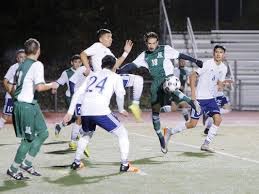
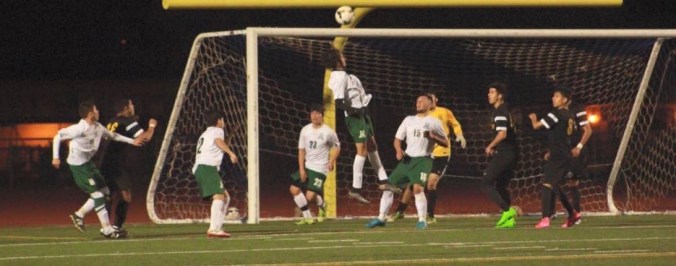
Alias High Boys’ Soccer: 2016 Undefeated League Champions! What’s Next?

Congratulations to the Alisal Boys’ Varsity Soccer Team for winning the 2015-2016 Gabilan League Championship. This is Alisal’s third title in the four-year existence of the re-aligned MBL Gabilan League, arguably the toughest league in the nation, from its inception in 2012. This year’s Gabilan Title marks the sixth championship in eight-years for the Trojans, a span that has seen them win 105 games.
 
However, as has been the standard for quite a long time at Alisal, the Trojans are reaching for an even more significant title: The California Central Coast Section (CCS) Open Division Championship! For the first time in the history of the CCS, the governing body has created an Open Division for this year’s playoffs, opening the door for a full-on California State Championship that could become a reality as soon as next year. With the San Joaquin Valley and other schools in the more remote parts of California switching their soccer seasons from fall to winter, California is now aligned from San Diego to Northern California, making it a bit easier to organize a legitimate state title.
 
CCS Background
 
In years past, the CCS has assigned divisions to each schools. These assigned divisions were based on school populations. For example, Bellarmine Prep, which has a student population of approximately 3600 students (all boys), and Alisal, which has a population of around 2600 students, co-ed, would be categorized as Division I schools. The CCS then turns to the medium sized schools like Archbishop Mitty, Harbor, and St. Frances, for example. These schools have smaller populations than do DI schools. Thus, they are placed in the Division II category. The smaller schools, like Palma, Pacific Grove, Carmel, and Soledad, to name a few, are put into the Division III category. When it’s all said and done, each school competes against schools that, more or less, have similar student populations.
 
But this year the CCS has decided to make things much more interesting. Now, eight schools, regardless of the size of their student population, can qualify to compete in the newly formed CCS Open Division, the highest division in this part of California. Entry in to the Open Division can be had in two ways: 1. Winning an “A” League championship 2. Having a high number of Power Points (earned by playing and beating A League teams)
 
As a result of their league championship, Alisal has automatically qualified for this year’s Open Division. The seedings for the Open Division playoffs will be revealed tomorrow. Because they are a high seed, Alisal is sure to host their first round match, which according to Prep2Prep.com, will be against Leigh High School. However, this is only an educated guess at this point, as the CCS will have their official seeding meeting tomorrow afternoon. First round games begin on Saturday, February 27, 2016. Stay tuned for more details.
 
Go, Trojans.

Alisal vs. Watsonville: Part II

Alisal High School Trojans Senior Night

Salinas, Ca.

10 February 2016

Whether you love the game or not, there is no prerequisite for attending tomorrow’s soccer clash between Watsonville and Alisal. However, it does help if you have penchant for nail-biting excitement and heart-stopping soccer, and tomorrow’s game is sure to provide plenty of both…and then some. Couple all of this with the fact that tomorrow is Senior Night for the Trojans, and, all of a sudden, you’re finding yourself at the center of the hottest event in Salinas since the release of Star Wars.

With a week left in the season, the Trojans and Wildcats are locked in a virtual tie for first place. Alisal, counting Thursday’s contest, has two games left, and Watsonville, because of its bye week, has three games left. With games already played, Alisal is currently in sole possession of first place. A win tomorrow will create even more distance between the Trojans and the rest of the field, putting Alisal in prime position to win their third Gabilan League Championship. It would be the Trojans’ third title in the league’s four-year existence.

The Trojans made life difficult for the Wildcats during their visit to Watsonville. Alisal struck first to take a 1-0 lead, but Watsonville fought back to get the equalizer with twenty-four minutes left in the game. The match ended in a 1-1, draw, but Alisal sent an early message to the ‘Cats that life is a little different when the Trojans play at home.

Since their tie with Watsonville, the Trojans have gone on to win five games in a row, scoring fourteen goals in the process, while conceding only one. Meanwhile, the Wildcats, still reeling a bit after the tie with Alisal, were forced into another 1-1, draw with Alvarez two days later. Since their clash with Trojans, the Wildcats have won three games and tied two, scoring twelve goals and conceding four. The Trojans are peaking at just the right time and only getting stronger, while it seems opponents are pushing the Watsonville to their limit, forcing the ‘Cats to grind it out for points.

Alisal will look to continue their dominance over the ‘Cats. In the last eight-years, Alisal has proven to be the superior team (4-3-2), beating Watsonville four times, including the 2010 CCS DI Championship. Sprinkled in there are three ties and only two losses to the Wildcats. In all honesty, though, nothing of what took place last week or last month or last year has any bearing on tomorrow’s game. Both teams will be on high alert, looking to outwork and outplay each other, eager, too, in taking one step closer to the title.

The J.V. game kicks off at 4:00 p.m., while the varsity match begins at 5:45. If history repeats itself, we should see an large and vociferous Alisal contingency, but an equally robust supporters section for the Wildcats, too. Make sure to get to Kearny Stadium early for the best seats in the house. The Trojans’ snack shack will be in full swing, too. We look forward to seeing you on the pitch. Go, Trojans!

Take it Easy: The Eagles and Dementia

For most of my life, my grandfather Santiago was my best friend. I spent innumerable hours with him, many times one-on-one, traveling together in his old Ford, going long stretches of time without saying a word to each other. We enjoyed each other’s company like this. When we did speak, we spoke in Spanish.

Grandpa spent a significant portion of his life living in Los Angeles, leaving Monterey, Nuevo Leon, Mexico, in his 30’s. He and my grandma and my aunts and uncles transplanted to San Gabriel and then Rosemead. My grandpa did well to land a decent job, one from which he was able to retire, leaving him with ample to time to visit the local swap meets and drink beer with friends in his garage. My grandma was always throwing out the junk he brought home, but my grandpa would just replace it with more junk from subsequent swap meet excursions.

In all this time, my grandfather never made a genuine effort to learn English. My grandma did. I hardly ever spoke to my grandma in Spanish because her English was near flawless. My grandfather, on the other hand, said things like, “ok,” and “yes,” but he never really put a sentence together. Then grandpa got introduced to the Eagles.

I think it was either my cousin Raymond or Ernie that introduced Grandpa to the Eagles’ self-title album Eagles. Keep in mind that he got turned on to it almost twenty-six years after the album’s debut, but all of sudden, my grandfather was speaking English. Well, not really, but he did learn a phrase, one that would he often interject in his good byes to me.

He was pretty proud of his new found language skills. I first heard his new phrase when I visited him in Diamond Bar. He was living with my Aunt Teresa, and I was a student at Cal State Fullerton, about seven-miles away. I used to ride my bike to my aunt’s house just to see my grandpa. It was a win/win for us. He needed help with errands and car repairs and whatever, and I was usually hungry. He’d buy me lunch or we would make a lunch together in the house. Most of the time, however, we just sat and talked. We talked about baseball, about school, about our dreams (we shared a similar dream—one that no other person I know has had), and about our family.

On this particular day, as I was about to roll down the driveway and head back to Fullerton, my grandfather stood in from of the house and said “Ok, mijo. Take ed eezy.” It was funny to hear because he sounded like Tony Montana from Scarface, but I understood clearly what he was saying. He was saying, “Take it easy,” and he was mimicking the lyrics from the Eagles’ song of the same name. It helped explain why he would always ask me to play that song for him, and when Glen Frey sang, “Take it easy,” my grandpa sang with him. It was pretty cool. From that point on, whenever we said our goodbyes, we included “Take it easy,” and we laughed every time we said it. I don’t know why we laughed, but we did. As was always the case, after visits with my grandfather, I was giddy and smiling all the way home. I must’ve looked like a maniac on a bike, but I loved my grandpa and he always put me in a good mood.

A few years later, my grandpa was hit hard with Alzheimer’s and Dementia. I knew nothing of either. Circumstances brought my grandfather to live with my mom and my siblings and me, before the severity of symptoms came were apparent. He was my dad’s dad, but we were more than happy to have my grandpa live with us. I was especially happy about it. After all, he was my best friend.

The onset of full-blown of dementia and Alzheimer’s was gradual in my grandpa, and as it was, we failed to recognize signs that anything was amiss with him. I guess whenever something seemed odd, we just thought it was Grandpa being Grandpa.

One day, though, I arrived at home and found my mom crying in the garage. She was distraught, and I was scared that something tragic had taken place. I didn’t want to hear any bad news, but my mom’s face was telling, and so I knew something had gone wrong. It turns out, my grandfather had made an inappropriate pass at my mother. My mom took was taken aback by it.

The fallout was harsh. The worst part of the entire episode, besides my grandfather later losing his mind, was the fact that we knew absolutely nothing about dementia or Alzheimer’s disease. We had no experience with it, and we didn’t know anyone that suffered from either disease. With this being the case, my brother and I reacted, and we reacted with anger and resentment. I, for my part, felt betrayed by my grandfather. I couldn’t grasp what had happened, and any attempt to understand it just brought on more confusion and anger. Even my dad was angry.

It wasn’t until later, until it was too late, that we learned from doctors that sufferers of dementia are affected by unpredictable sexual feelings, depending on what part of the brain is effected. At the time, we failed to realize that my grandfather’s symptoms had reached a clinical level, but we couldn’t tell, for had we known, our collective reaction would have been more understanding. I wish I could go back to those days with the understanding I have now. Out of my own ignorance, I lost my best friend. In the end, my grandpa did not recognize me anymore. In the months and years since the episode at my mom’s house, I rarely saw my grandpa. By the time that love and forgiveness won out, it was too late. He didn’t know who I was. And so our ties were severed in the most unfortunate way. Being ignorant and failing to understand what was going on is a regret I still carry with me today.

Glen Frey died today, Monday, January 18, 2016. . Every time I hear “Take it Easy,” I always think of my grandfather, and when I do, the image always includes my grandfather laughing aloud with his head thrown back, just before he says to me, “Ok, mijo. Take ed eezy!”

Bryan

Brian

29 September 2015

“To die, to sleep –
To sleep, perchance to dream – ay, there’s the rub,
For in this sleep of death what dreams may come…”                                                                 -Shakespeare

Bryan was one of my favorite students. He was a sophomore when we met, and like me, he was new to the Opportunity Program, a program designed to serve and meet the needs of “at risk” youth, a term which, for all intents and purposes, can be applied to every single elementary, middle, and high school kid in East Salinas, because to be a kid in East Salinas means to be at risk: at risk of being shot and killed.

Bryan was shot and killed yesterday in front of his mom’s house. He was seventeen.

I know this hurts his mom. I had spoken with her on several occasions concerning Bryan’s academic standing. I had spoken with his step-dad, too. Bryan’s mom cared a great deal for her son, but Bryan, when I first met him, was infected with all the rebelliousness that comes with being a teenager.

Because of the design of the Opportunity Program, I spent a significant amount of time with Bryan. He enjoyed coming to class, where, along with my other ten or eleven or twelve kids, depending on how many students decided to show, we’d spend more than four-hours a day together, in one room. 

I often had long talks with Bryan. He was mature for his age, and he had been in regular school before coming to the program, something that could not be said about my other students. Bryan had gotten a taste of real high school life. My other students had not, and because they hadn’t, they were mostly lost causes, as far as school was concerned. Not Bryan, though. He had a future of some kind. I could tell.

In class or during the time we spent walking around the stadium’s track, Bryan and I talked about his schooling, his family, his drug and alcohol use, his sex life, and his political views. Yes, we spoke politics. He was especially interested in immigration policy. I knew more about what was going on in Bryan’s life than did his parents, something that is true with a lot of students and their teachers. Sometimes a teacher is the only adult a kid feels comfortable opening up to. 

At one point during our school year, a man wielding a pair of gardening scissors in public was shot and killed by Salinas Police outside of a market on a busy street. Bryan, moved by what he perceived as police injustice, grabbed a bullhorn and led a march and rally at the corner of where the man had been killed. Bryan believed in what he was doing. He felt a connection to the dead man; he saw the wrongness in his death, and he wanted to spark change. I didn’t know that Bryan had done this until a picture of him holding a bullhorn and thrusting an angry fist in the air ran in the local Salinas newspaper. I was moved when I saw the picture, and I told him how proud I was that he had gotten involved with something about which he had felt strongly.

Bryan was shot multiple times, his bloody body lay motionless on the apartment complex’s driveway, a few feet from the apartment he shared with his mom. He was pronounced dead at the hospital.

Bryan had once again made headlines in the same newspaper. I heard of the news this morning. Naturally, I found it hard to believe. I was told during class, and I wanted to cry, but all my current Opportunity Program students were watching me, and so I felt the need to hideaway my emotions. I don’t know why I didn’t cry in front of them. I could have, easily. 

Unfortunately, Bryan is not the first of my students to be shot and killed. There have been many others, more than I can count, and they were all at risk, simply because they lived in Salinas.

Bryan’s death hurts, though. I saw him evolve and transform into a young man with direction, no matter how directionless his direction may have seemed. He had transitioned back into regular school from my program, but ultimately ended up at another alternative education program in Salinas, from what I heard. It had been about six months since I last saw him. I wish he would’ve visited more often, just like he used to. 

Now that he’s dead, the only thing I can think of are all the laughs we shared. I can still hear his snickering and his wild howls and his simultaneous laugh and handclap combo. We capped on each other in Spanish and English and we talked about our favorite Mexican foods and cars and girls. We shared many lunches together, and we barbecued as a class. I trusted him with errands, and he never let me down.

I’m sure there was a lot I didn’t know about Bryan. There’s a lot I don’t know about a lot of people. The media will call his murder “gang related,” but Bryan wasn’t a gang banger. He was smarter than to allow himself to be used by a gang. Bryan was a regular kid trying to navigate his life to get himself to a nicer place. 

You know, though, enough is enough. This depraved behavior has to come to an end. In the name of simple sanity, the murdering has to stop. People of all ages and from all walks of life are dying violently and senselessly in Salinas. One would imagine that the good people of any city under a siege of violence, as Salinas is and has been, would band together to rid their city of the murderous and violent element(s), but this doesn’t happen in Salinas. It’s citizens are scared–simply put. Salinas’ citizens can reclaim their city. It can be done, but it takes courage. Bryan had courage—a lot of it—but Salinas will no longer get a chance to see it. 

Rest in Peace, Bryan.

Your friend,

Mr. C.

My 9/11

I let the phone to go voice mail five times before picking up.  It was Jennifer, but it was also 5:50 a.m. I may have thought it was her after the second call, but it was early and I was sleeping and everything about the phone and the ringing was rude. I stared at the ceiling one last time before answering.

Before Guen was Guen, before she changed her name, she was Jennifer, and so on this morning, Jennifer said, “The World Trade Center is burning. It’s on the news.” I didn’t understand at the time why this was worthy of multiple phone calls, but there was a loving pitch in her tone, and so it spurred me to get my ass out of bed.  

I waded into the living room and grabbed the remote control. I was in my underwear. It was cold. I turned on the T.V. and took a seat at the edge of the couch, one foot pointed in the direction of the bathroom and the other at the T.V. I wasn’t yet convinced that this was worth holding my piss. I crossed my arms to keep warm, but the tiled floor was relentless.

As Jennifer had said, one of the Towers was indeed burning. I was distantly interested. I had been in Battery Park just a few months earlier. The Twin Towers are a presence, for sure, and it would seem unreasonable to believe they could be harmed. But now there was smoke and fire and a newswoman’s chatter. Her squawk was incessant, crackling with opinion and speculation.  She was talking over the images, and as I sat and listened and watched, I noticed, from the live footage, a plane flying behind the buildings. The footage was live! I thought to myself, “Wait a minute. I just saw a plane fly by behind that building, and I didn’t see it fly out. What’s up with that?” And as my brain organized these thoughts, the newswoman said in a hurried voice, “Can we rewind the footage or can we get a different angle? I thought I saw plane fly behind the building and didn’t see it come out on the other side.” The camera’s angle changed.  “Oh. My. God!” she said. Her male counterpart said the same. I said, “Oh, fuck!”

My reaction to the whole thing was altered. There was now an emotional change. There was confusion, too. I don’t remember showering or dressing or getting in my car. However, I do remember stopping at the corner of Garo and Stimson, and Howard Stern saying, “Oh my God! The whole World Trade Center just imploded and went down. It’s gone.”

At Norwalk High School that morning, our principal sent an early morning email to all staff members. “Dear Teachers, please do not turn on your televisions. Please do not play the radio or show the news.” I was already angry, and this email nudged me towards a dangerous emotional line. I had the T.V. turned on when my second period, eleventh grade English class walked in. We perched ourselves on our desks and watched for the full period, in disbelief. We watched all day. Not one of us could have realized, in those moments, the level of change our world was to experience.

And just like that, the Twin Towers were severed from New York’s skyline, an unwanted alteration to an iconically American skyline. What little innocence America had left was also gone. America, as I knew it, had died.

Of course, it turned into a 360 degree issue, with almost every finger pointed in the direction of the Middle East. Others were pointing their fingers at our American government. It was shameful, of course.

Regardless of the controversy surrounding the tragedy, back home, approximately thirty of my ex-students have since deployed to Iraq and Afghanistan to fight the “evil-doers.”

One of my boys, an ex-Alisal Soccer player, told me a story about when his father picked him up from the San Jose Airport. He had arrived home from Afghanistan. Chucho said he was walking through the terminal with his father, his U.S. Marines backpack slung over his shoulders. He heard a familiar sound, a sound soldiers of war know. It was a landing plane, but he heard it as an “incoming.” His dad watched in surprise as his son hit the floor in haste, in the middle of the airport terminal, surrounded by a mass of people, as he yelled “Incoming! Down!” 

Chucho’s dad looked down at him and said, “Que estas haciendo?” After an embarrassing pause, Chucho picked himself up, He adjusted his backpack, and walked out of the terminal with his dad. 

After serving four-years in the Marines, Chucho enlisted for another four. He will fight this war for the rest of his life. He was ten when the planes hit. I was thirty-one. 

Thank you, Chucho. 

To Hell and Back: A Colonoscopy Story

My visit to Dr. Hell was prompted by blood in my stool. I was thirty-five. According to the American Cancer Society, most people should begin screening for colon and rectal cancer and polyps at age fifty. I told my wife about my slightly bloody stool, and she suggested I see a doctor about it. I didn’t want to see a doctor, but I like living, so it was an easy decision.

I asked around to see if anyone was familiar with gastroenterologists in the Monterey area, and most people agreed that if you wanted your asshole thoroughly inspected, Dr. Hell was your man. Apparently, he’s peered into some of the most importsnt anuses in Monterey County. I paid Dr, He’ll a visit in his Monterey office. With a name like Hell, I expected someone, well, more hellish, but he was anything but. Dr. Hell was clean cut, profession, l and genuinely congenial, his qualities putting me at ease for this particular adult, rite of passage.

I told him I had seen blood in my stool. I usually take a quick peek at my deuces to make sure the plumbing is sound. He was ready to start the check-up. He asked me to drop my pants. I did. He asked me to turn around and kneel over the inspecting table. I did. With my shorts and underwear dropped to my ankles, my hands crumpling the paper laid out on the table, Dr. Hell proceeded to inspect my ass. It took him only a few moments to inspect. “It looks like you have some small, external hemorrhoids, but it’s worth getting a closer look,” he said. By the time I was done buttoning my shorts, Dr. Hell was already scheduling my colonoscopy. Because there’s a significant amount of prep time involved in a colonoscopy, we chose Monday as a good day to have the procedure.

Along with instructions for my prep time, Dr. Hell handed me two small, plastic bottles, about the size of hotel shampoo, and told me to drink one on Sunday morning and the other on the morning of the procedure. I was also ordered not ingest any food beginning on Sunday morning and until after the procedure. I ate like a pig on Saturday, knowing that I was going to go without food for over twenty-four hours. I have a pretty high threshold for pain, but not for hunger.

On Sunday morning, I drank the first of the two bottles of gut salvage saline formulation. These are fancy medical terms for laxatives that induce major shits and Hershey squirts. Sunday was not a normal day. I was confined to our tiny apartment for the entire day because I going to the toilet every ten-minutes. The shits just kept coming and the pain was gut wrenching, pun intended. My asshole was chafed, too, and it got to the point where I could no longer wipe because of the burn. Instead, by Sunday afternoon, I had to resort to patting my anus with a sizeable wad of Charmin because wiping was out of the question. My mind looked ahead to the other bottle I was to drink the next morning, and I began to think that maybe Dr. Hell was actually the devil. There was no way that another bottle was going to clean me out any more than I was already. My nighttime toilet sittings produced nothing but air, like dry heaves, as I was completely hollow. Nevertheless, I did what the doctor ordered, and on Monday morning, I reluctantly downed the other bottle of saline formula.

Guen drove to Dr. Hell’s office. It was a must. I would be under anesthesia for the procedure, and there are other powerful drugs involved, so I wouldn’t be in any shape to drive when it was done. I have to admit that I was a little nervous. This was the first major, medical procedure I’ve ever had, and didn’t know what to expect. Luckily, Dr. Hell’s entire staff was superb in helping to calm my nerves. A female nurse was my first contact. It was her job to make sure I was properly set for the procedure, which meant being dressed in a gown and having the IV’s placed into my left arm—there were three—and to make sure I was aware of what was to take place. I asked her if there was any pain involved, and she said, “No, not really. It’s pretty standard. Most people don’t remember a thing because of the drugs.” I said, “Oh, not me. I’ll be awake. It takes a lot to knock me out.” “Oh, ok. We’ll see,” she said.

I was looking up at the ceiling and lights, taking in the ringing phones and busy voices, as they rolled me into the spacious room where the procedure was going to happen. The nurse parked me right under a massive set of floodlights, another then a small team of nurses took over. They plugged the drug lines into the IV’s and engaged me in small talk. My nerves were as calm as they would get, which is to say I was still feeling a bit anxious.

A few minutes later, Dr. Hell threw open the double doors, walked into the room like a king, and said, “How we doing, Mark? Did the drugs kick in yet?” It was a pretty impressive entrance, one I’ve often tried at home with my family, but it never impresses anyone. “To be honest with you, doc,” I said. “I’m still pretty awake. I don’t feel sleepy or anything.” I really didn’t feel the effect of the meds. I wasn’t joking when I said it takes a lot to knock me out. “Well, give him some more drugs then!” he said as he turned and walked out. “I’ll be back in a few minutes, Mark.” “Ok, doc,” I said.

“Ok,” the nurse said, “we’re going to give you more drugs, Mark.” I said, “Ok,” and this is the last thing I remember.

At one point during the procedure, I awoke. I was on my left side. I opened my eyes, and hanging directly in front of me was 60” plasma, flat screen television, all in HD. There was a live image of a camera probing a fleshy cavern, and immediately my mind began to make sense of it. “Is that the inside of my ass? Oh, shit!” I whispered to myself as I once again fell into a deep sleep.

The next thing I remember is that I’m in the corner of the nurses’ station sucking on a straw plugged into a kid’s juice cup. I felt eighty-years-old, sitting there sort of helpless, unsure as to where I was and what I was doing there. One of the nurses noticed that I was awake, and she asked if I was ok. I told her I was ok. A few minutes later, Dr. Hell came up to me to ask the same. “He said, “Well, Mark. You’re ass looks great. You have some small hemorrhoids but nothing major. All systems are go, and you are all clear. I won’t see you again until you’re fifty.” “That’s good news, doc,” I said. Thank you for everything. I appreciate it.”

You know that happy feeling you get when you get a check-up and the doctor tells you everything’s ok? Well, I was happy like that. And I can tell people that I’ve been to Hell and back.